
LKKL History
Edgars was born in 1969 in Ķengarags and first crossed the threshold of a dojo in the second grade — in 1977, beginning his karate training at the "Yunost" ("Junostj") sports club under the guidance of Sergey Panteleimon. At that time, Riga was dominated by the "SENE" style — one of the earliest and most distinctive branches of Soviet karate.
From the very first days, Edgars proved to be an exceptionally driven and disciplined student, never missing a single training session.
The Karate Ban and First Steps in Martial Arts
In the early 1980s, the first restrictions began in the Soviet Union: karate was banned for children under 16. Despite this, as the youngest yet one of the most tenacious students, Edgars was transferred by coaches to the "Dynamo" sports club in the very heart of Riga.
In November 1981, a total ban on karate was imposed across the entire territory of the USSR. Criminal liability was introduced under Article 219 of the Criminal Code for organizing training and teaching this martial art.
At the time, it was difficult to comprehend why this occurred. Today, various theories exist. One of them is that due to its surging popularity, Soviet authorities perceived the karate movement as a potential threat. Sports clubs brought together physically strong, disciplined individuals without unhealthy habits around authoritative teachers — senseis, forming an autonomous community that could become an alternative sphere of influence.
Despite the bans, the number of people eager to train continued to grow. Many enthusiasts went underground, continuing sessions and forming clandestine groups. Edgars chose this path as well.
In 1984, he resumed martial arts training under Valentin Vasilyev. Edgars still fondly remembers his teacher as an exceptional master who combined intellect and deep spirituality with the true power of a warrior. At that time, Edgars had just turned 14.
He trained in the same group as the then-renowned Sokolov brothers, Boris Teryukhagov, and other formidable fighters. Over time, he became a worthy rival to them.
The workouts were a true school of survival. After grueling sparring sessions and heavy physical conditioning, only those who could endure without breaking remained in the group. During that period, the sessions were fiercely brutal, virtually without rules — strikes to the groin and eyes were practiced. Edgars looks back on those times with gratitude, emphasizing that the foundation of his Spirit was forged right then. It was the stage of his most rapid growth as a fighter, when his perspective on full contact as a test of truth was definitively formed.
In Search of the Strongest
Feeling his strength grow, Edgars sought opportunities to test his skills in practice. He visited various martial arts schools and challenged the strongest fighters in Latvia to duels.
Edgars fought representatives of Fischer’s Jeet Kune Do school — these bouts took place in the Biķernieki forest and in Dārziņi. He also faced Nikolay Strigin’s pankration fighters at the "Selmash" gym. In the Rumbula forest, a bout took place with Roman Saltykov — now the coach of the Canadian Goju-Ryu Karate national team (at the time, Roman was a student of Māris Ābiļev’s SENE school). Following this bout, they became close friends, and Edgars later served as the best man at Roman’s wedding.
First Official Tournament and the Beginning of the Kyokushin Path
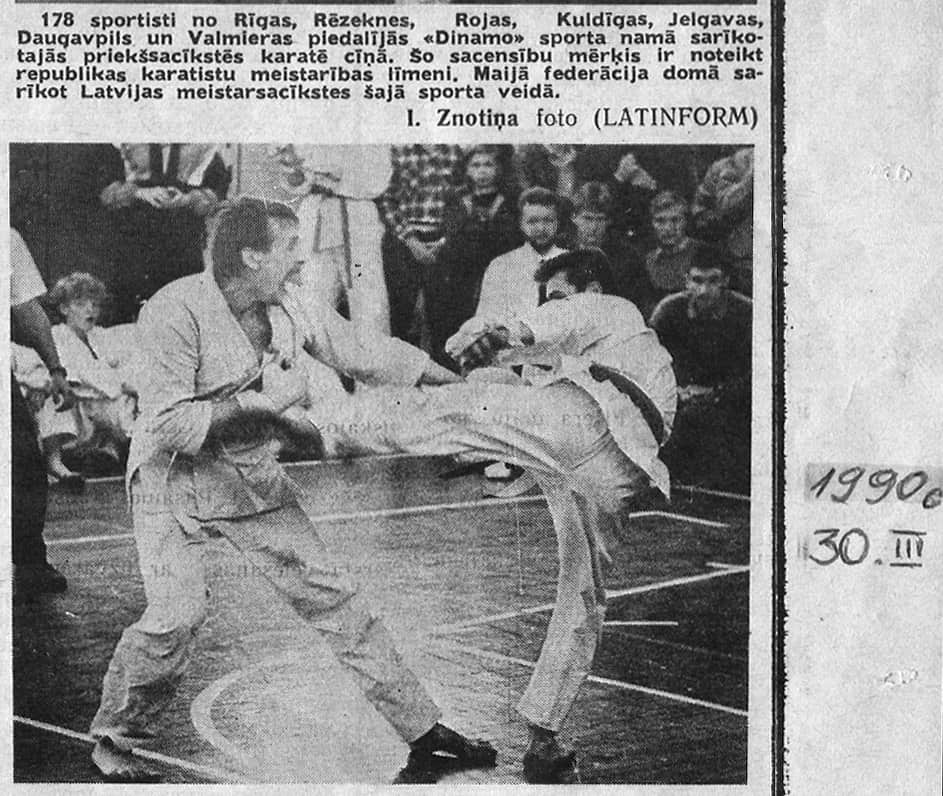
In 1990, the opportunity finally arrived to officially test skills in competition. It was the first Latvian championship following the lifting of the ban, held under formally non-contact WUKO rules, although body strikes were permitted with considerable force.
By a coincidence of circumstances, Edgars stepped onto the tatami wearing a Kyokushinkai dogi given to him by a friend. At that moment, he knew almost nothing about the style and had no idea how inextricably his entire future life would be tied to Kyokushin.
In true Kyokushin fashion, Edgars was disqualified for exceeding the allowable level of contact, despite having decisively won his previous two bouts. The encounter was captured by the press — his decisive bout was caught by a photojournalist:
Edgars considered this decision unfair and continued his search for truth. Getting to know the Kyokushinkai karate system of the legendary Masutatsu Oyama more closely, he found exactly what he was looking for: uncompromising rigor, discipline, and an invincible Spirit.
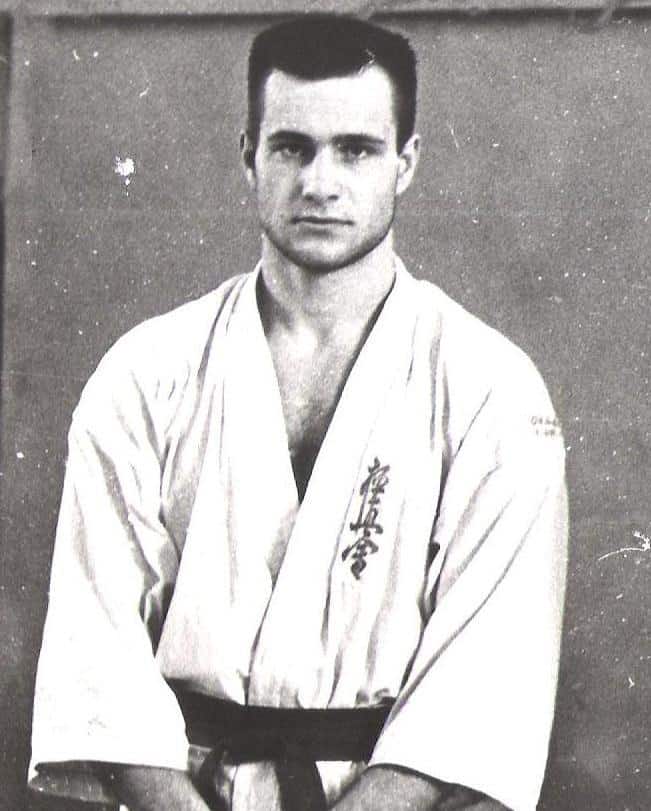
In that same year, 1990, Edgars began taking Kyokushinkai examinations under Ukrainian representative Igor Pivny in Mykolaiv. In 1991, he continued his certifications in Mykolaiv, and later under Alexander Tanyushkin in Moscow.
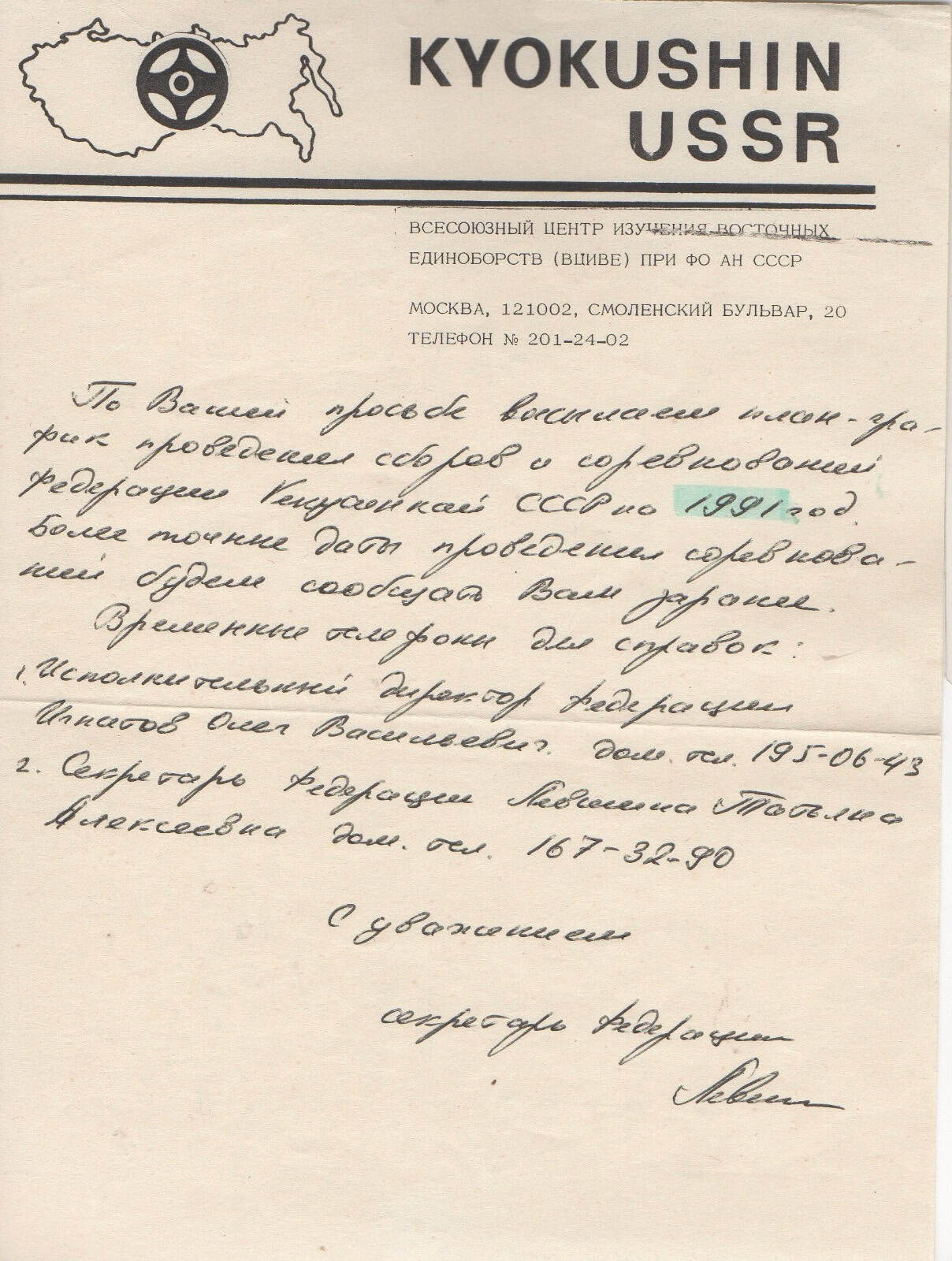
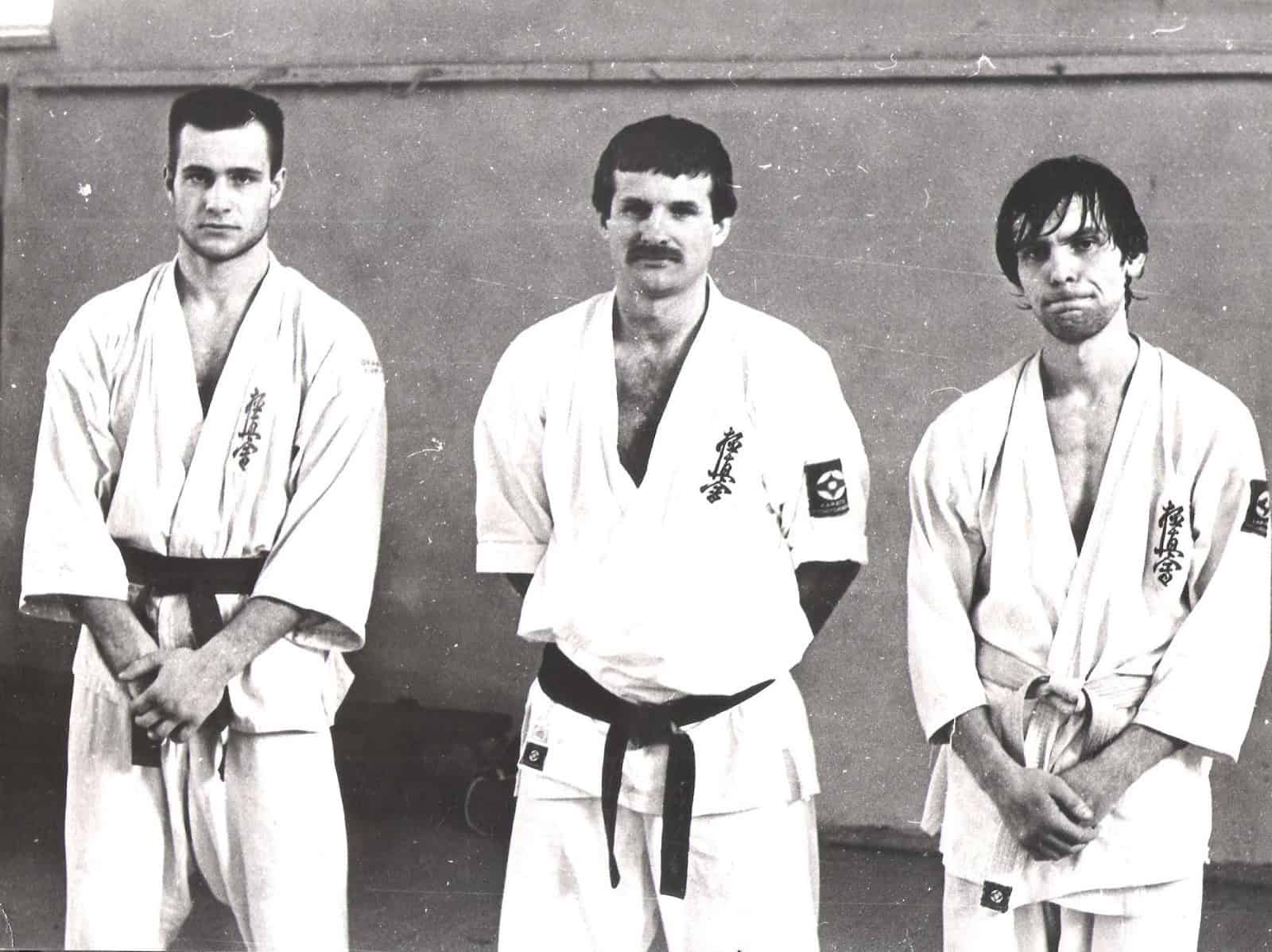
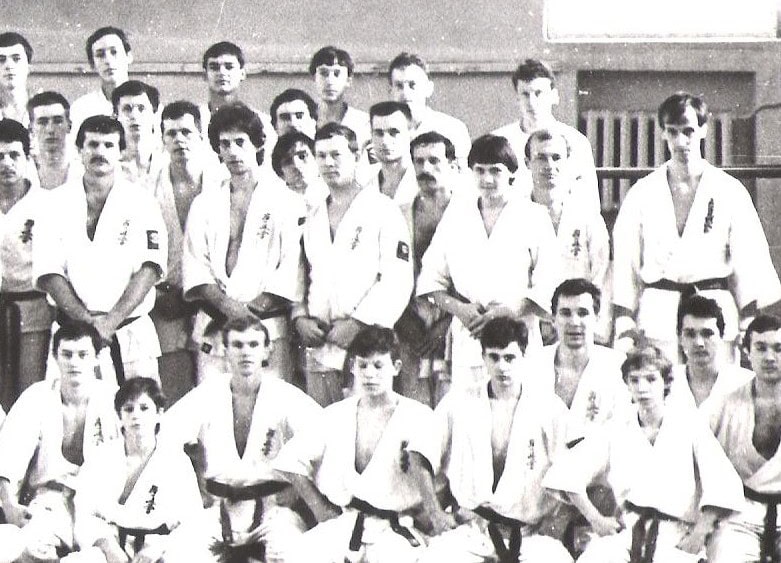
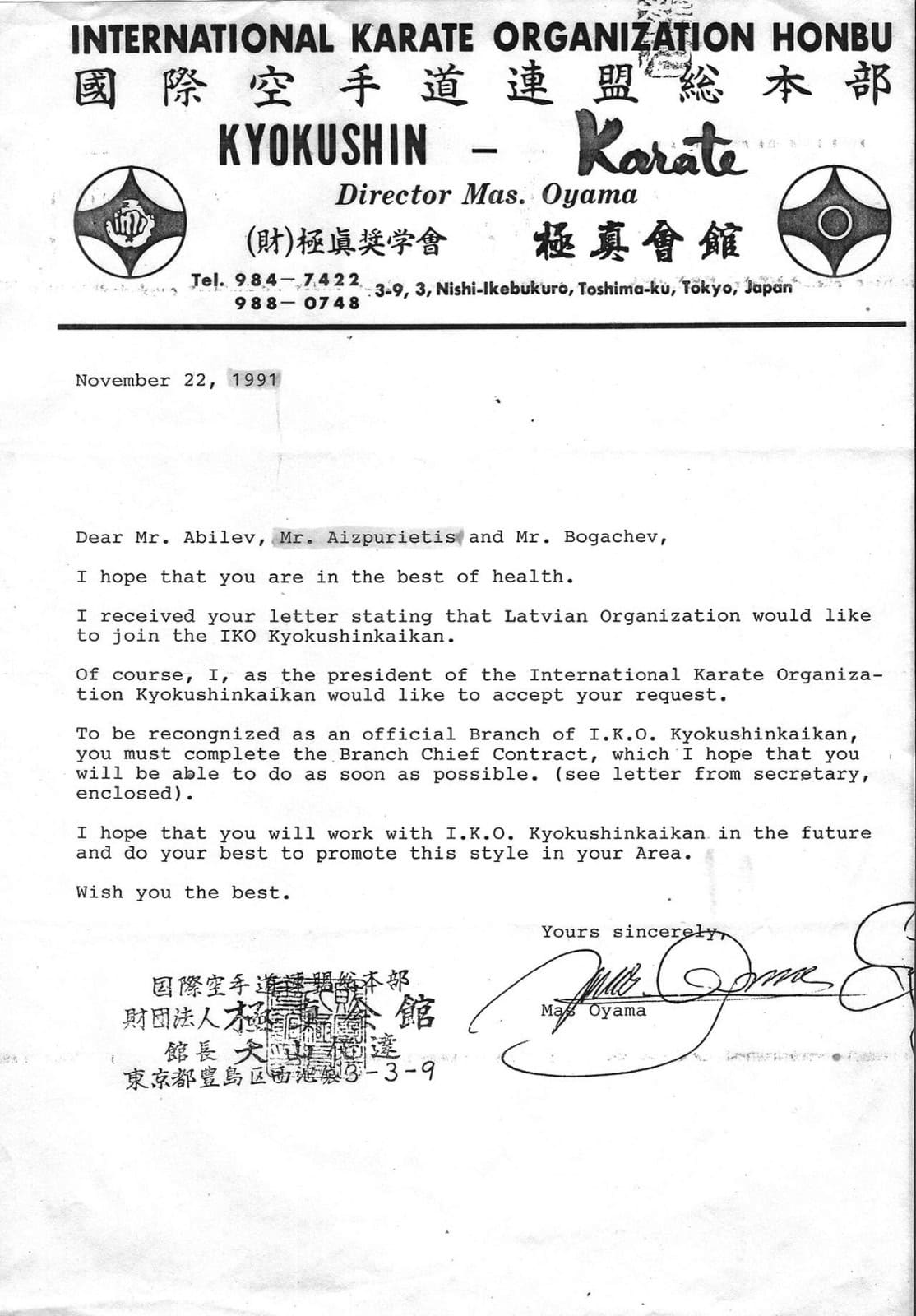
In 1991, Edgars, along with fellow martial artist Antonin Bogachev and President of the Latvian Karate Federation Māris Ābiļev, sent a letter to Masutatsu Oyama's Honbu requesting admission into the International Karate Organization (IKO).
Masutatsu Oyama personally responded by letter, confirming readiness to admit the Latvian organization; however, approximately six months earlier, the right to represent Kyokushinkai in Latvia had already been granted to Jim Leslie. Edgars and Antonin attempted to establish contact with Leslie, but on fundamental principles of development, no common ground could be found, and the decision was made to forge their own path.
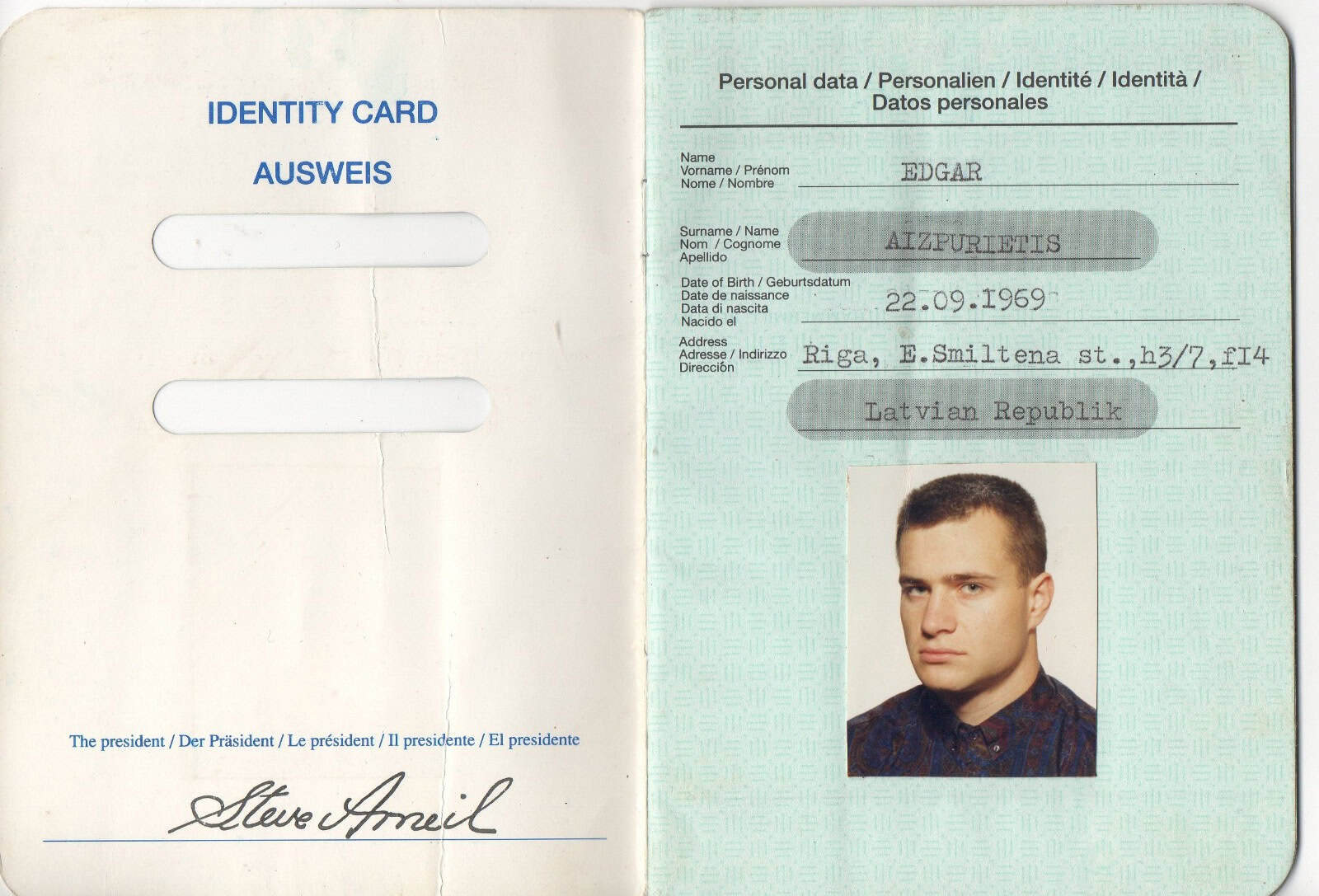
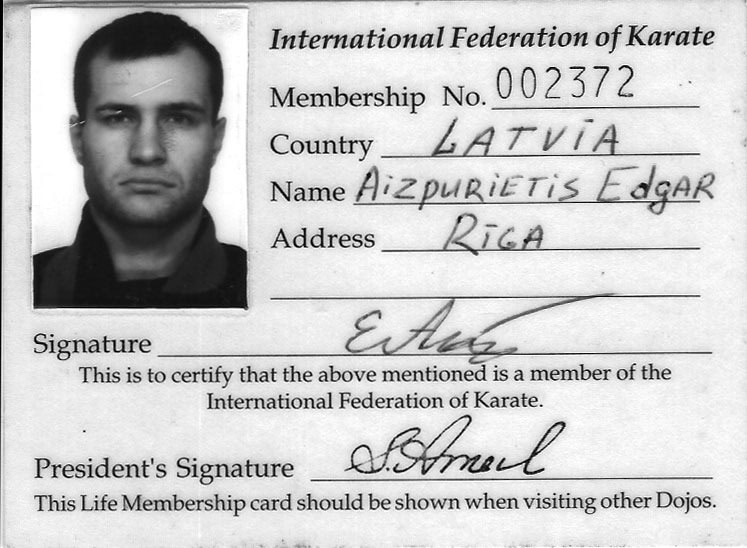
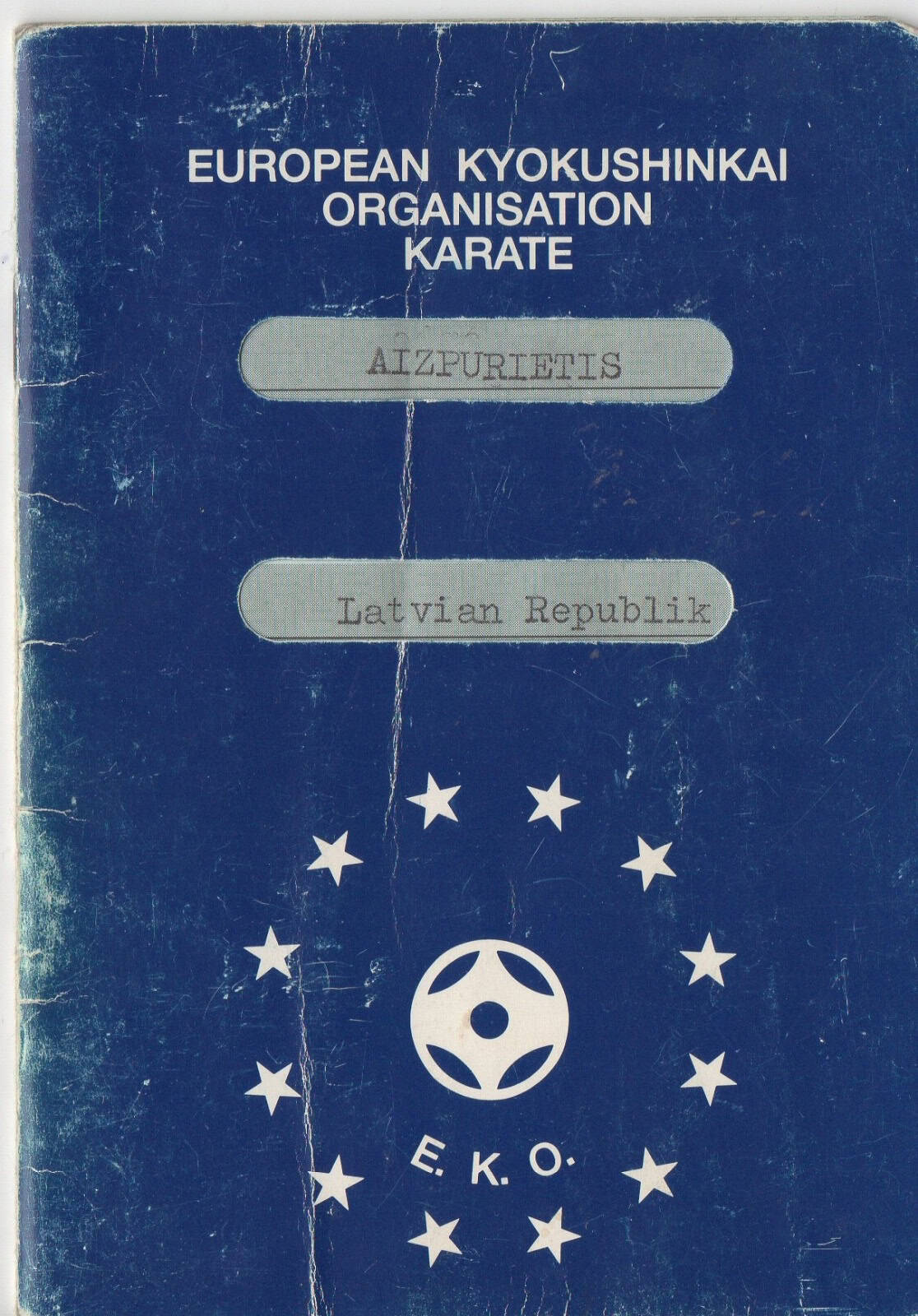
At the same time in England, the IFK federation was established by Masutatsu Oyama's student Steve Arneil. Its branch in Latvia was headed by Edgars for several years, receiving an official international Budo Passport and later passing leadership to Antonin Bogachev.
Ukrainian Championship and Conquering New Frontiers
Driven by the Spirit of Kyokushin, Edgars continued along his Path. He competed in the Open Ukrainian Championship in Kherson — at that time one of the strongest teams not only in Ukraine, but across the entire Soviet Union. Edgars won all of his bouts except one — a bout with Vadim Yakovenko, where the opponent was lighter, and victory was awarded to the lighter fighter by judges' decision. At the same tournament, Edgars won the tameshiwari competition, breaking the highest number of boards with strikes.
Yet this was not enough. Edgars wanted to test himself under different rules, expanding the boundaries of his mastery. To this end, he began boxing training at the "Trudovye Rezervy" club, adapting his hand techniques to work in boxing gloves.
At that time, kickboxing was rapidly gaining popularity, and many began looking upon traditional karate with skepticism. Taking this as a personal challenge, Edgars, representing the Kyokushinkai school, decided to compete in the first professional tournament "Amber Mars-90" under Muay Thai (Thai boxing) rules. Prior to the tournament, he trained for some time under coach Ivars Sidorovičs. These were the first serious competitions of a new generation of fighters in Latvia, where karate, kickboxing, and Thai boxing fighters met in a single ring.
Edgars entered the ring against Latvian Champion and Eurasia Cup winner Aleksandr Dyachenko. The Riga Athletics Arena was packed to capacity: there were no empty seats, and due to the immense crowd, approaching the arena was virtually impossible. The bout was fought under Muay Thai rules. Already in the first clinch, Edgars secured his opponent's head and landed a series of knee strikes, two of which proved decisive. To the disappointment of the crowd, which was craving a long spectacle, the bout ended after just 26 seconds.
Muay Thai (Thai Boxing)
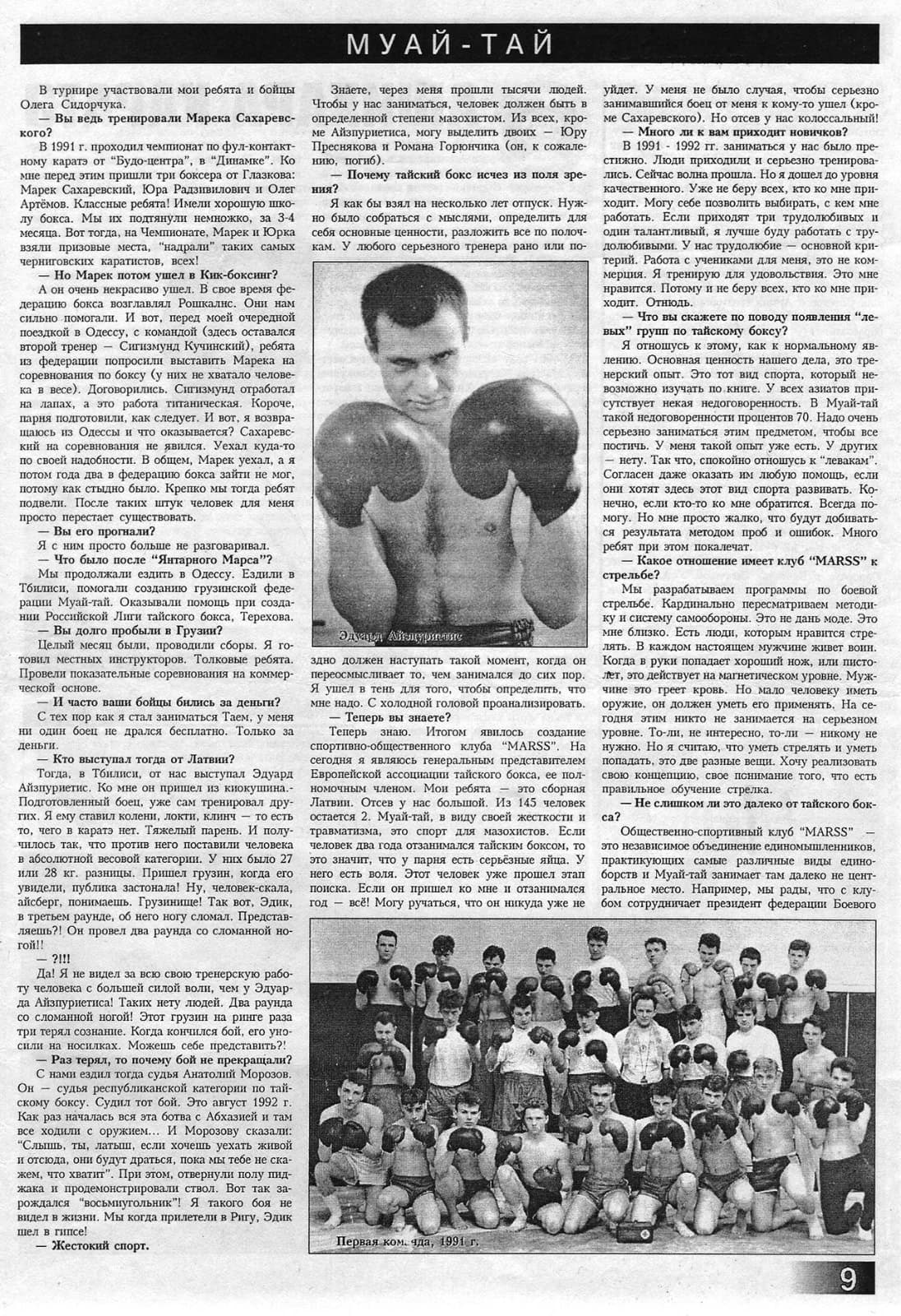
For about a year, Edgars competed under Muay Thai rules as part of the "Mars" club under the guidance of Ivars Sidorovičs. One of the most vivid events of his career was a professional bout in Georgia.
The weight difference between the fighters was approximately 25 kilograms — naturally, not in Edgars' favor. The Georgian fighter was significantly taller and was the USSR junior heavyweight boxing vice-champion. The bout began with aggressive pressing by the opponent. Edgars absorbed several heavy strikes and sustained a severe hematoma in the eye area. Already in the first round, from an impact against the opponent's knee, he broke the instep of his foot.
Yet those who have passed through the Kyokushin school do not give up. Despite the injury, the Georgian fighter repeatedly found himself on the canvas — having expended all his energy in the first round, he looked increasingly helpless. The judges did everything to carry their compatriot to the end of the bout, and Edgars and his corner understood: victory on foreign soil required only a clean knockout. A knockout could not be achieved, and the victory was awarded to the host of the ring, whom the locals nicknamed "King Kong". Nonetheless, after the fight, local fans came up to express admiration for Edgars' courage. Following this bout, he spent three months in a cast.
"TO BE, NOT TO SEEM"
The primary life compass on and off the tatamiEdgars never chased belts, positions, or titles, and never advised his students to do so. Notably, Edgars disliked formal kihon — from kata, he practiced mainly Sanchin and Tensho, emphasizing that Masutatsu Oyama attached tremendous importance to this particular technique.
After successful performances in karate and Thai boxing, Edgars prepared three times to compete in Kyokushinkai tournaments: at the last USSR Championship, the Russian Cup, and the Slavic Countries Cup. However, fate closed the door on participating in these tournaments three times. Accepting this, Edgars resolved to fully realize himself through his students.
First Major International Triumph of Students
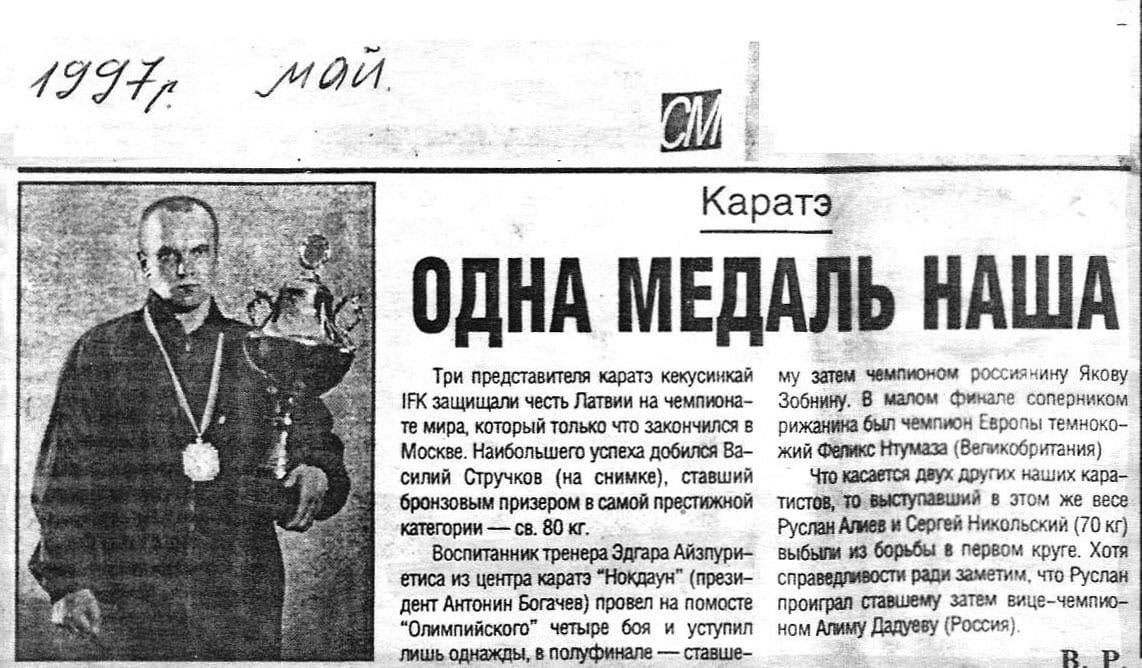
For the first IFK World Championship, held in Moscow in 1997, Edgars prepared his student Vasily Struchkov, who competed in the open weight category. At the tournament, Vasily defeated several of the world's finest fighters and advanced to the semifinals, where he conceded to future world champion Yakov Zobnin.
In the bout for 3rd place, Vasily defeated the seasoned Felix Tumaza — 2nd Dan master, European Kyokushinkai Champion, and favorite of the British club. This result became the first major international achievement of the Latvian team in those years, once again confirming Edgars' elite coaching caliber.
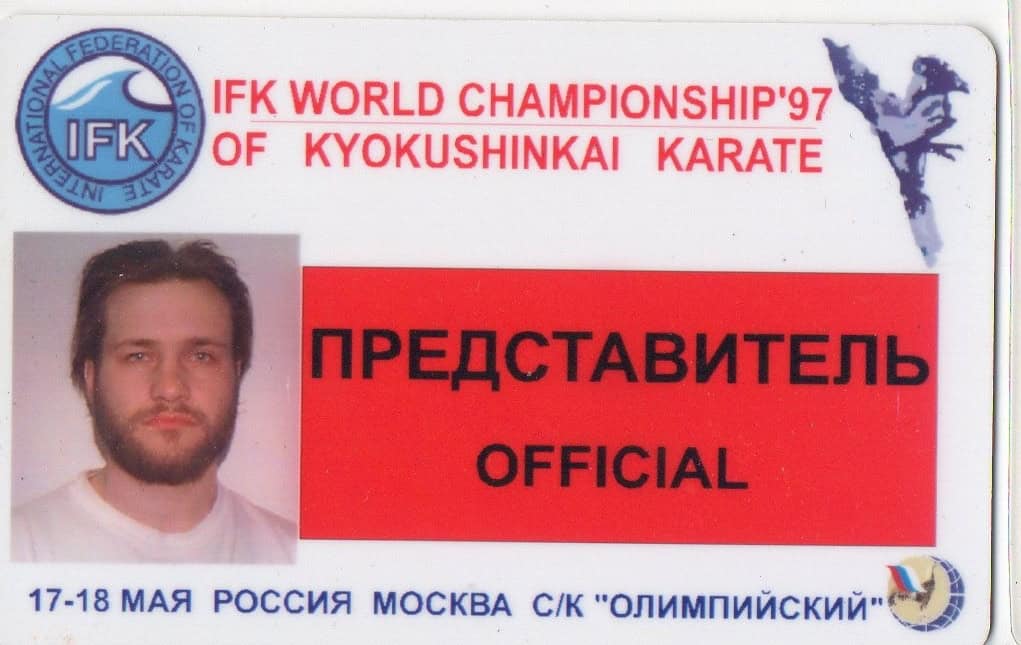
From the team led by Edgars over various years, many outstanding martial arts leaders have emerged:
- Vitālijs Vasjanovs — Founder and Head of the Latvian Ashihara Karate Federation, 5th Dan
- Roberts Hatmuļins — Founder and Head of the Latvian Shidokan Federation, 5th Dan
- Tatjana Smertjeva — Official Representative (Branch Chief) of IKAK in Latvia, 1st Dan
- Sergejs Nikoļskis — Russian Knife Fighting vice-champion, 1st Dan
- Dmitrijs Grigorjevs — Kickboxing World Champion
- Vasīlijs Stručkovs — Bronze medalist at the 1997 IFK Kyokushinkai World Championship
- Ruslans Alijevs — Semifinalist of the Eurasia Cup
- and many other respected masters.
Hiatus and Return to the Fight
After that championship, Edgars stepped away from the warrior's path for ten years. Having endured many trials and confronted the injustices of the 1990s, he immersed himself in the search for the meaning of life within Christian teachings. Yet he did not abandon sports: in Ulbroka, he established an athletic gym using personal funds.
Over time, he became a successful real estate entrepreneur; however, due to the 2007–2008 economic crisis and unfair competition, he lost almost everything. Once again facing the question of his future path, the decision was made to return to coaching.
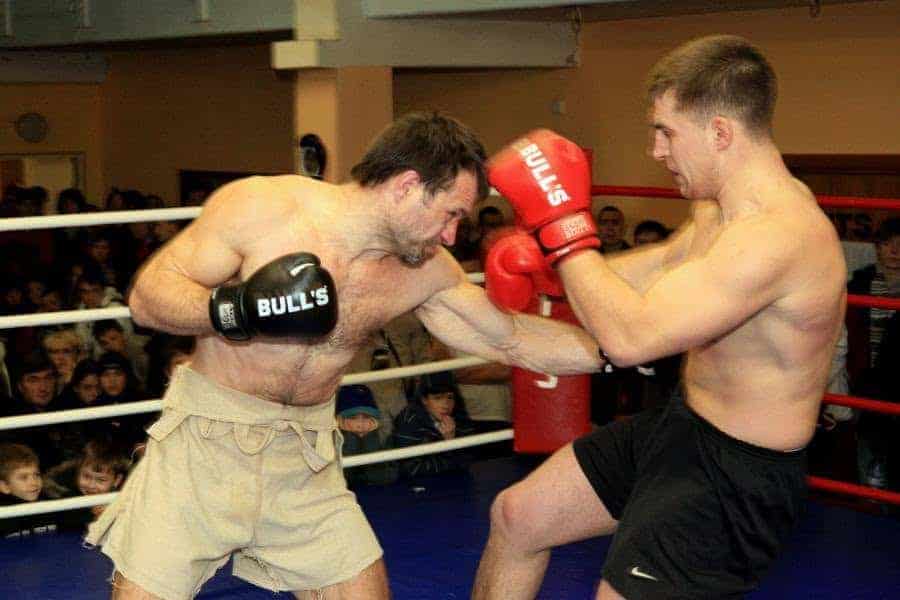
Edgars reached out to his former student Roberts Hatmuļins, who at the time was the Shidokan Branch Chief in Latvia and holder of a 4th Dan, asking him to organize a fight under K-1 rules. Roberts was then successfully promoting Shikon Pro professional tournaments. The bout took place against rising Latvian kickboxing star Kristaps Zīle. Ten years without fight practice took their toll: the bout proved grueling, especially considering the age difference of nearly twenty years and the difference in speed. Nevertheless, by judges' decision, fundamentals and experience prevailed.
Six months later, Edgars stepped into the ring again — against Romāns Skiba, a young fighter from the Liepāja club "K-Sports" (student of coach Genādijs Čekomazovs). Since the previous bout had sparked discussion, Roberts wanted to see an unquestionable outcome. The fight lasted all five rounds.
Already in the first round, Edgars felt a sharp pain in his left side. At that moment, he did not yet know he had suffered a lung rupture — a pneumothorax. But giving up was not part of his plans: NEVER GIVE UP! The fight once again concluded with Edgars' victory by judges' decision. After the bout, his condition deteriorated, and he spent Christmas in the hospital, where he underwent lung surgery. Friends later joked: "We need to make money on you first — insure you, and only then send you into the ring."
European Veteran Champion
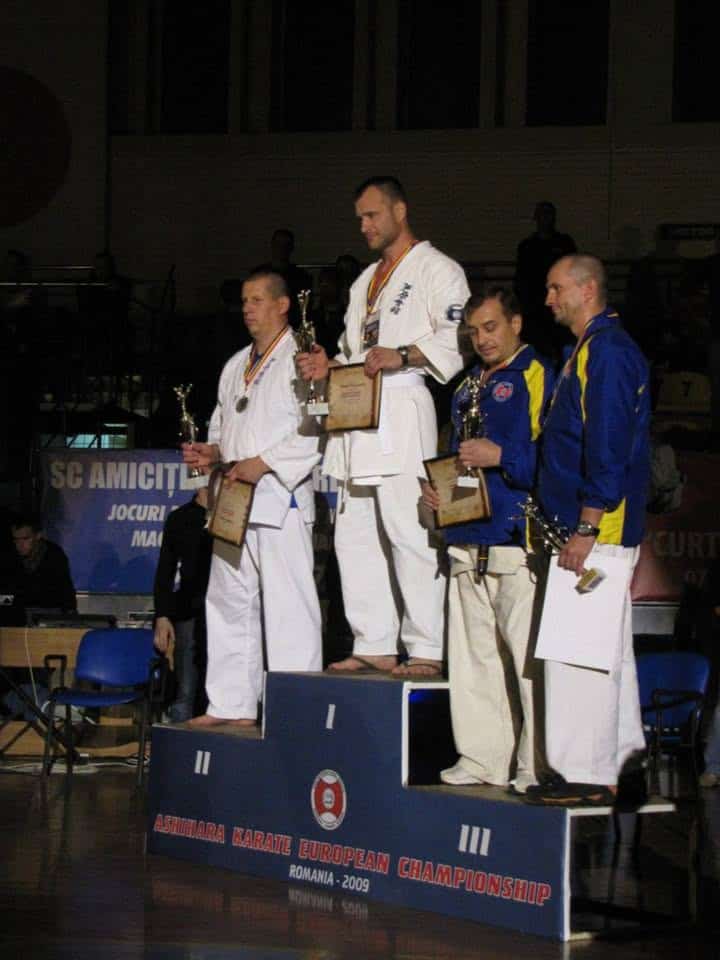
A year later, Edgars decided to compete again — this time under the guidance of another student of his, Vitālijs Vasjanovs, head of Latvian Ashihara Karate. It was the Ashihara Karate European Championship in Romania.
As a matter of principle, Edgars stepped onto the tatami wearing a white belt, visibly demonstrating his attitude toward regalia: TO BE, NOT TO SEEM. At the tournament, Edgars fought three bouts for the European Veteran Champion title. He finished the first two early. In the final, he met experienced Ulyanovsk Kyokushin fighter Sergey Smirnov and secured victory by judges' decision.
The Birth of LKKL
Following this triumph, Edgars embarked on the creation and development of the Latvian Contact Karate League. The first joint training session took place in Ulbroka, at Līgo Park. Representatives of Shidokan and Ashihara Karate participated, along with Edgars' own modest club, which had only four members at the time.
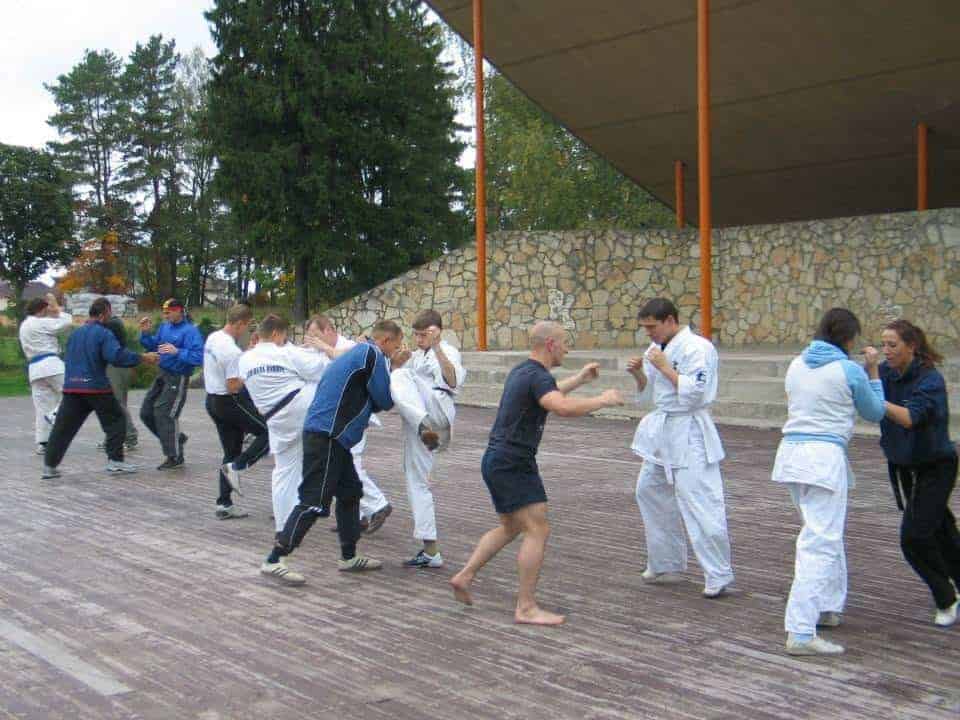
Initially, training took place exclusively in Ulbroka, but gradually the League grew: a branch opened in Purvciems, then in Ķengarags, and now a new dojo opens its doors in Jugla.
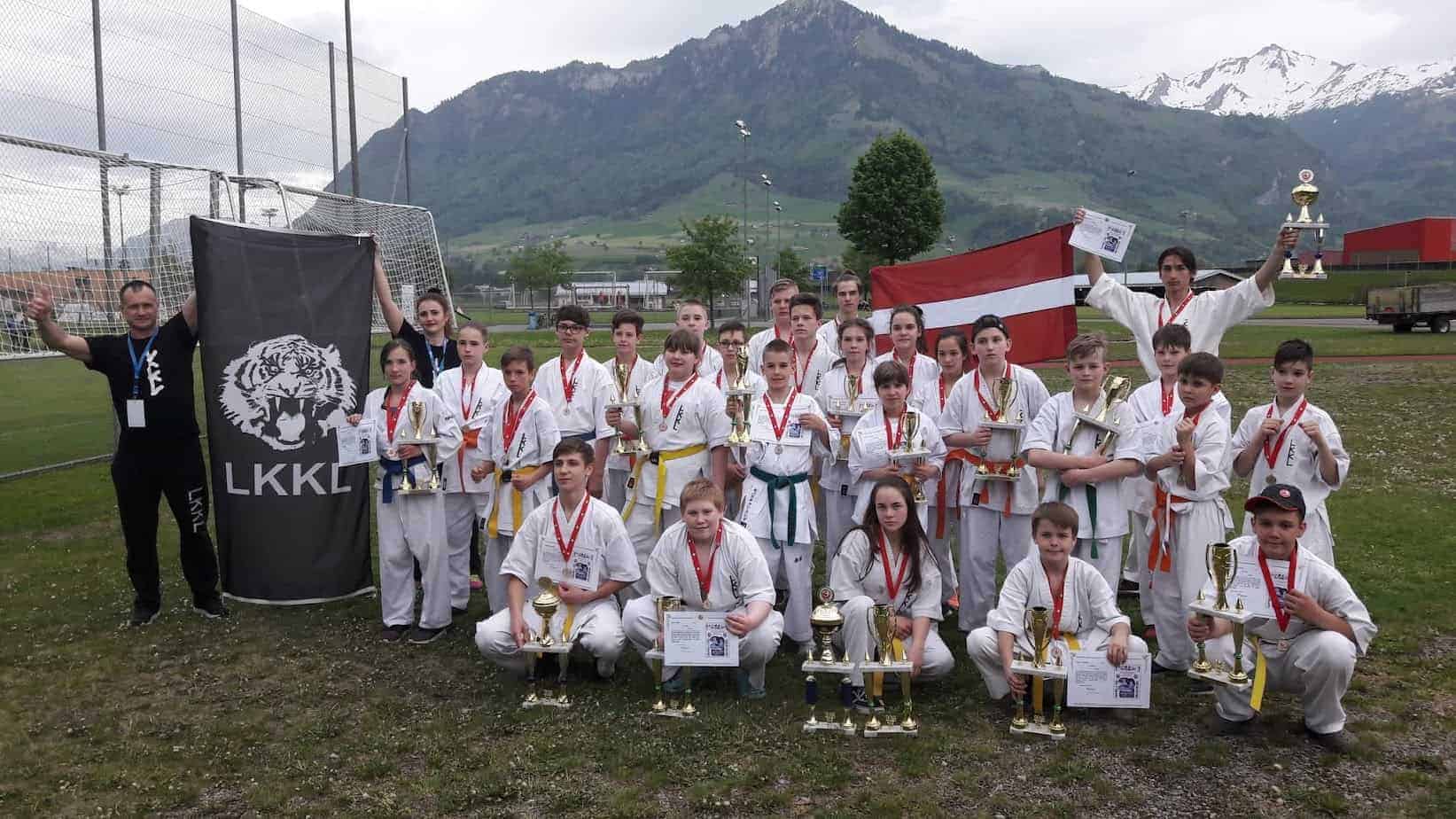
Students began competing regularly in championships. The first international trip took place in 2016 to Switzerland: out of six participants, three earned podium finishes — first, second, and third. This opened a new milestone in the school's athletic growth.
World Champions
Over time, LKKL continued to advance and conquer increasingly higher peaks. Two world champions have emerged from our club:
The first world champion was Mark Deniss Rauda, who captured the KWF World Champion title in the Netherlands. Soon after, this success was repeated by Marija Skuloviča, who became the IFK World Champion in Germany.
At those same world championships, other fighters of ours also won podium spots: Ričards Neladuss took second place at the World Championship in Spain; Oļegs Klimovičs became World Vice-Champion in the Netherlands at the same tournament won by Mark Deniss Rauda; Kirils Stecs is a multiple-time World Championship medalist and one of the most experienced fighters on the national squad.
A New Chapter — WKB
It is difficult for a small local organization to survive in today's sports world. Therefore, Edgars' goal was to elevate the League to a fundamentally new international level and one day host European and World championships in Latvia. The decision was made to join the worldwide organization WKB — World Kyokushin Budokai.
This goal is already being realized: we have won the rights to host the WKB European Championship in Latvia in 2029. The tournament is already included in the organization's official calendar. This is an enormous responsibility and at the same time an epochal step in the history of the Latvian Contact Karate League.
History continues. The most exciting part is still ahead.